The American Recreational Vehicle—or RV—occupies a unique, almost mythic space in the national psyche.It is simultaneously a mechanical product, a cultural icon, a mobile architectural statement, and a physical embodiment of the American ideal of self-reliance and territorial freedom.
To understand the RV’s place in American society, one has to examine it not just as a vehicle, but as a lens through which identity, geography, and social dynamics interact on the highway.
1. The Mythos of the Frontier and the Open Road
America is a country built on the idea of westward expansion—the belief that identity is found beyond the horizon. When the frontier was physically settled, the spirit of movement transformed into the road trip. The RV is the ultimate iteration of this impulse: a covered wagon equipped with air conditioning, microwave ovens, and satellite internet.
It fulfills a deep-seated cultural paradox—the desire to escape domesticity while taking domestic comfort along for the ride.It allows Americans to explore vast, formidable, and empty landscapes—the deserts of Utah, the mountain passes of the Rockies, or the endless flat ribbons of Interstate 80—without ever truly having to surrender control over their environment.
2. A Spectrum of Social Classes
The modern RV market mirrors the socio-economic topography of the United States. It ranges across a vast spectrum:
- The High-End Motorcoach (Class A): These behemoths—often the size of a commercial transit bus—can cost anywhere from hundreds of thousands to over a million dollars. They feature leather interiors, slide-out living rooms, generator plants, and back-mounted tow rigs carrying sports cars. For wealthy retirees or affluent travelers, they are rolling country clubs—a statement of achievement that allows them to move between high-end resort parks without setting foot in a hotel.
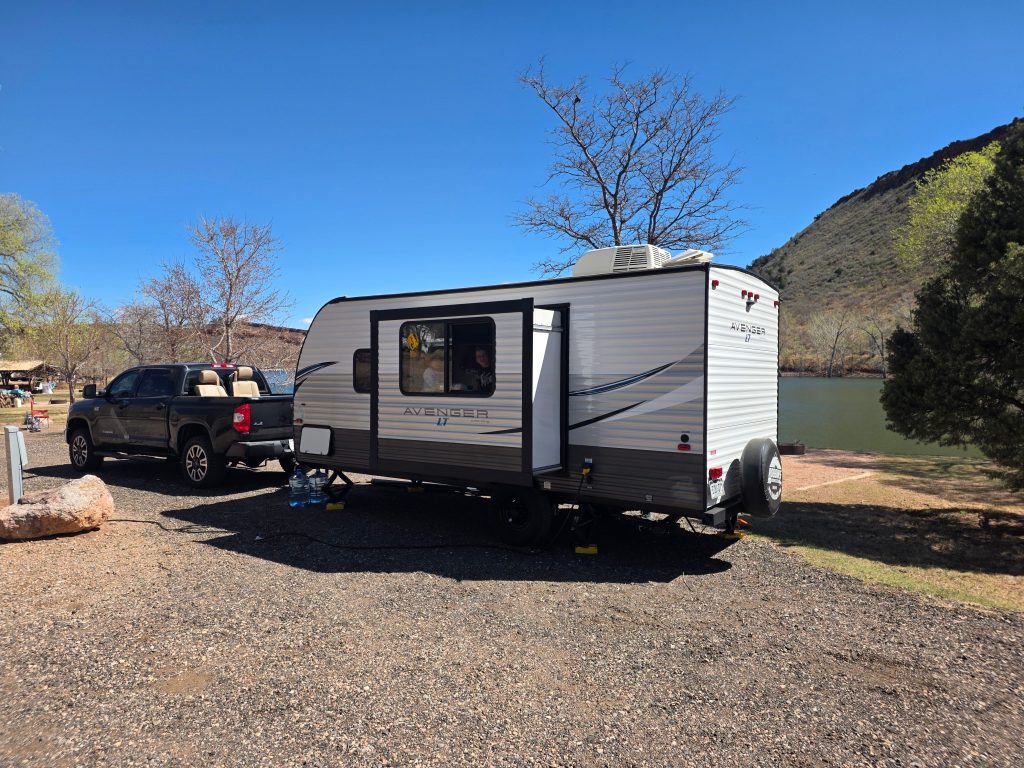
- The Middle-Class Towable (Fifth-Wheels & Travel Trailers): Pulled behind heavy-duty pickups, these are the backbone of family vacations. They represent seasonal leisure, summer road trips to National Parks, and weekends spent tailgating at college football games.
- The Practical Exploration Rig (Class C & Camper Vans): Favored by younger generations, digital nomads, and outdoor purists. These models balance maneuverability with basic utilities, emphasizing access to backcountry trailheads, surf breaks, and remote public lands over sheer square footage.
- Housing of Last Resort: There is a starker side to the RV’s place in society. As traditional housing costs have escalated, RVs, converted buses, and older trailers have increasingly become permanent residences for seasonal workers, fixed-income retirees, and people priced out of conventional real estate.
3. Perception by Other Road Users
On the asphalt, the relationship between RV drivers and other motorists is complex, often shifting between romantic intrigue and logistical frustration.
The Trucker’s View
Truck drivers often view large RVs with a mix of caution and mild irritation. While an RV may approach the size of a Class 8 semi-truck, it is frequently piloted by an amateur operator who requires no special commercial driver’s license (CDL) in most states. Professional truckers must share highway space, rest stops, and fuel islands with drivers who may lack formal training in handling high winds, long braking distances, or wide turning radii.
The Commuter & Passenger Car Perspective
To everyday car drivers, an RV on a two-lane scenic highway can be a source of immediate tension. Moving slowly uphill, swaying in crosswinds, or taking up two parking spots at a scenic overlook, the RV can feel like a mobile blockade. Yet, simultaneously, there remains an undertone of envy. Passing a well-appointed rig on a rainy day, with its lights glowing warmly inside, evokes a universally understood desire: the freedom to just keep driving.
4. The Subculture of the Campground and “Boondocking”
To those inside the ecosystem, RV culture fosters distinct social structures:
- The RV Resort: Gated communities on wheels where neighbors park feet apart, roll out astro-turf mats, set up string lights, and socialise over campfires. It is an instant, transient neighborhood where camaraderie is built around shared mechanical advice, route recommendations, and regional pride.
- Boondocking (Dispersed Camping): The antithesis of the resort. This involves setting up camp on public land (such as Bureau of Land Management territory) with no hookups for water, power, or sewage. For explorers, this is the purest form of the discipline—using solar panels, lithium battery banks, and water conservation to live comfortably in total isolation in the desert or forest.
Summary
Ultimately, the American RV is a rolling contradiction. It is a symbol of absolute independence that relies on a massive infrastructure of interstates, fuel stations, and dump sites. It is a humble vehicle of nature-bound exploration that often carries all the material comforts of suburban living. Above all, it stands as a unique fixture of American mobility—a statement that home isn’t necessarily a fixed piece of land, but whatever view happens to be framed by the windshield when the sun goes down.